How to Layer Skincare Without Turning It Into Chemistry Class
Cleanse, treat, moisturise, protect. Where oils, devices and strong actives belong — and the three things worth remembering if you remember nothing else.
Layering has acquired a reputation for complexity it does not deserve. The underlying principle is one sentence long: lighter, more watery formulas go on first, richer ones later, so nothing is blocked from reaching the skin it was made for.
The core order
- Cleanse — remove, don't strip. Skin should feel comfortable afterwards, never squeaky.
- Targeted treatment — watery or light formulas, applied onto slightly damp skin.
- Moisturiser — seals the hydration you have just applied.
- Sunscreen — mornings, as the final skincare step before makeup.
If you use a facial oil or an occlusive balm, it generally goes later in the sequence rather than earlier — after the moisturiser, at the point where you are sealing rather than delivering.
Directions beat rules
Every general rule above has legitimate exceptions, and the product in your hand knows about them. A formula designed to be applied to dry skin, or before cleansing, or as a final step, will say so. Follow it.
When products pill
Pilling — those small rolls that appear when you rub — is usually a quantity or timing problem rather than an incompatibility. Two fixes solve most of it:
- Use less. Most serums need a few drops, not a palmful.
- Give each layer a moment to settle before the next. Press rather than rub as you apply.
The instinct to add more product when something is not working is understandable and almost always counterproductive.
Strong actives do not all need to be friends
You are not obliged to fit every active you own into a single evening. Alternating routines — one active on some nights, a simple hydrating routine on others — is a legitimate and often better strategy. Competing actives crowd each other and the barrier pays for it.
Where a device fits
This depends entirely on the device and cannot be guessed. Some are designed for clean, dry skin, with products applied afterwards. Others are designed to be used with a conductive gel or a specific product medium as part of the treatment. Read the instructions before deciding where in the sequence it belongs — and never improvise.
What this means for your ritual
If your skin is reactive, introduce one new product at a time and hold everything else steady for a few weeks. It is slower, and it is the only approach that tells you anything reliable.
The current range as a worked example
Roles are easier to see with real products in front of you, so here is the AUVYRA range read purely as positions in a sequence:
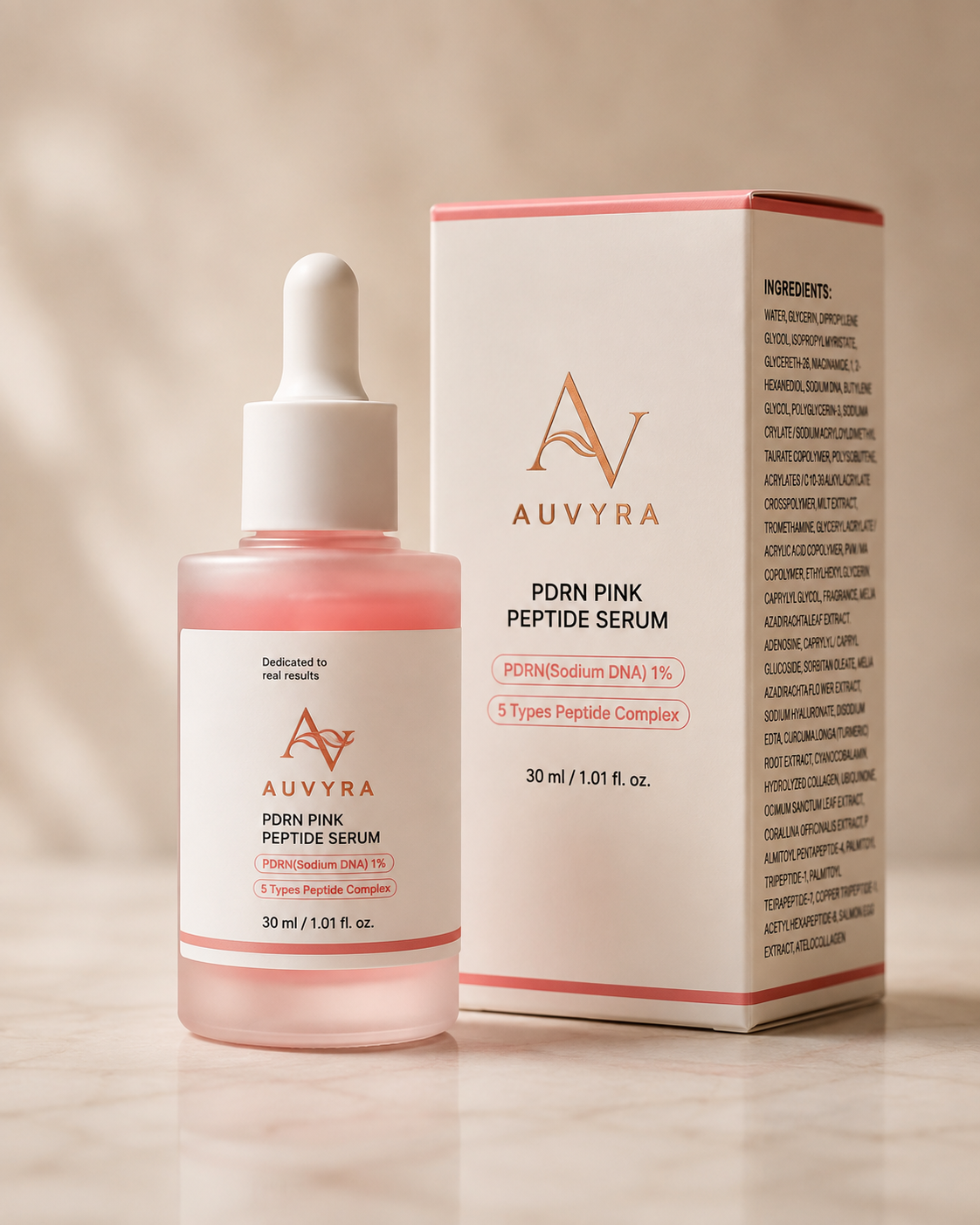
- PDRN Pink Peptide Serum — the lightweight serum and treatment step, early, on slightly damp skin.
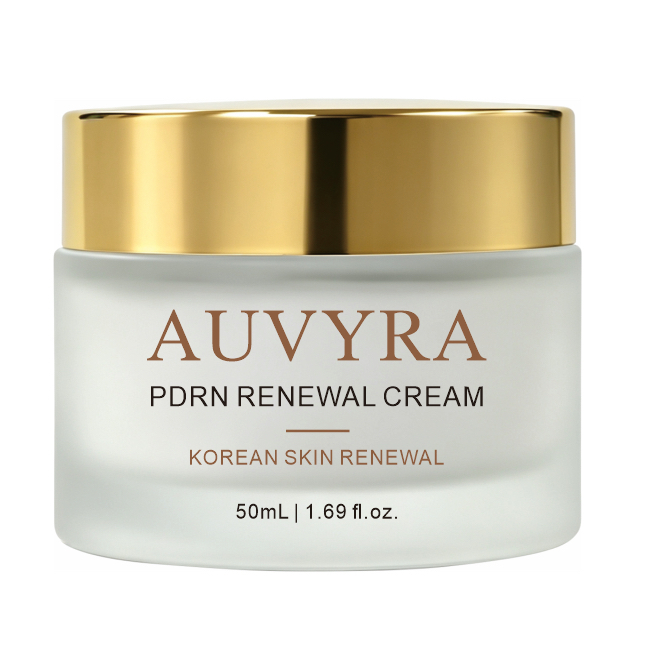
- PDRN Renewal Cream — the richer moisturising step, applied after the serum.
- Sunscreen — the final skincare step of the morning, over everything else.
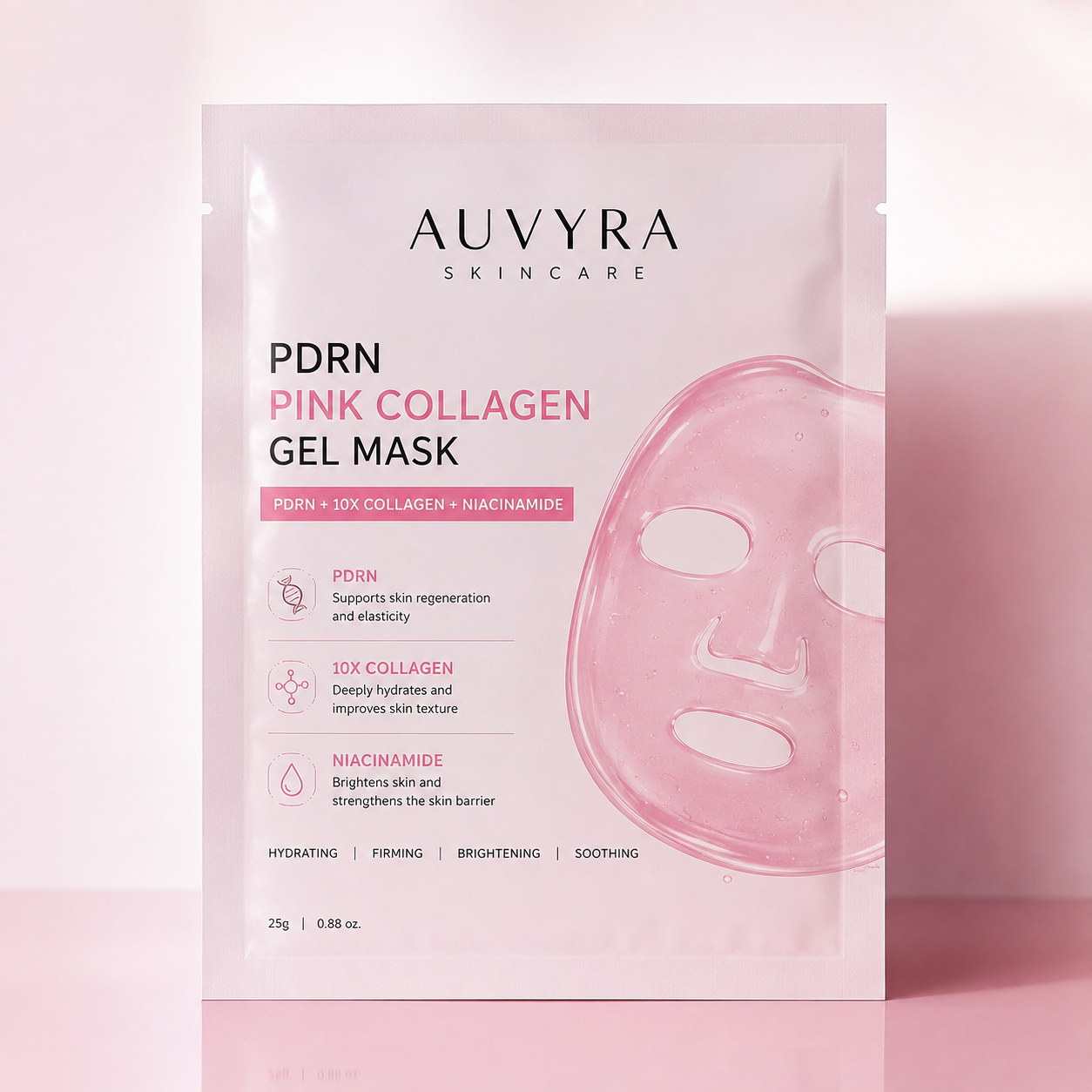
- PDRN Pink Collagen Gel Mask — an occasional treatment evening, not an everyday layer.
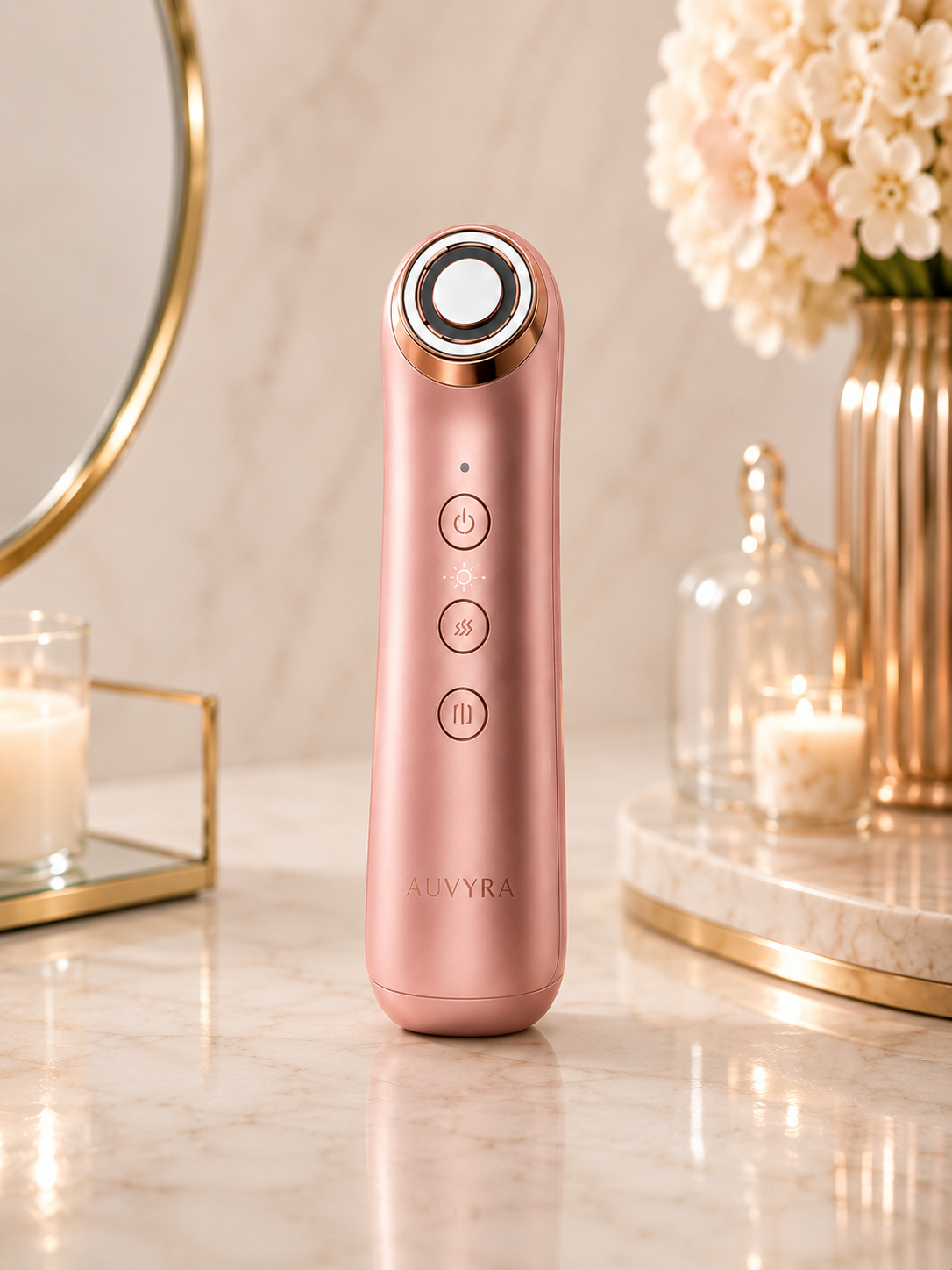
- Booster Pro and other devices — placement depends entirely on the mode instructions supplied with the device.
A gel mask does not slot into that order at all. It replaces the serum step for the evening it is used, and nothing intensive is stacked behind it. The full explanation of each of these products lives in its own article; here they are simply demonstrating what a role looks like.
Practical takeaways
- 01Cleanse, treat, moisturise, protect — light textures before rich ones.
- 02Use less product and let layers settle rather than adding more.
- 03Check device instructions for where a session belongs; never assume.
Continue the ritual
Pieces from the AUVYRA range that relate to this reading. Availability shown is live.