PDRN Renewal Cream: The Moisture Step, Considered
Why a moisturiser is a different job from a serum, what hydration and conditioning actually mean, and how a richer cream earns its place at the end of a routine.
The moisturiser is the least discussed step in most routines and the one people most often skip when a serum feels sufficient. It is worth being precise about what it is for, because the two products are not interchangeable and neither replaces the other.
Why moisturiser is a distinct step
A serum is a delivery format: light, quickly absorbed, built to carry a small number of ingredients into the upper layers of the skin without leaving much behind on the surface. That lightness is the point, and it is also the limitation — a serum is not designed to sit on the skin and keep it comfortable for the rest of the day.
A moisturiser is a finishing format. It carries conditioning ingredients, and it also leaves a soft film on the surface that slows how quickly water leaves the skin. Applied after a serum, it does two useful things at once: it adds its own conditioning, and it keeps the step underneath it from evaporating away in twenty minutes.
Hydration and moisturising, in plain English
- Hydration is water content. Humectants — glycerin, hyaluronic acid, panthenol — attract and hold water in the upper layers of skin.
- Moisturising, or conditioning, is what keeps that water there and keeps the surface soft: emollients and lipids such as squalane and ceramides that smooth and cushion the skin's surface.
- Skin can be oily and dehydrated at the same time. Dehydration is about water; dryness is about lipids. A good cream addresses both, which is why the distinction rarely needs to be agonised over in practice.
Why a richer cream follows a lighter serum
Layering follows texture: watery first, richer after. A light serum applied over a cream has very little chance of reaching the skin, whereas a cream applied over a serum works exactly as intended. That is the whole reasoning, and it holds regardless of brand.
What to look for in a conditioning moisturiser
If your skin feels tight after cleansing, looks dull by the afternoon, feels rough to the touch, or reads as dehydrated in photographs, the step you are missing is usually this one. A conditioning moisturiser is what you are looking for when you want:
- Skin that feels comfortable rather than tight in the hour after washing.
- A softer, smoother surface under fingertips and under makeup.
- A supple, well-conditioned look rather than a flat or papery one.
- Support for the appearance of a comfortable moisture barrier through a dry season or an air-conditioned week.
The AUVYRA PDRN Renewal Cream
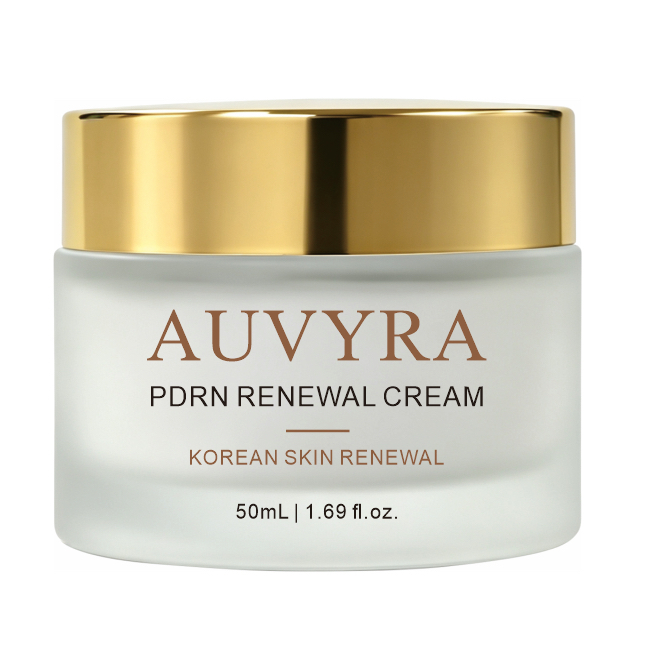
The Renewal Cream is a cushioned daily moisturiser, 50 mL / 1.69 fl oz, made in Korea. It is built around PDRN (sodium DNA) — the same ingredient family covered in our PDRN guide — in a considerably richer format than a serum can offer.
Alongside the PDRN, the verified packaging shows a broad supporting cast chosen for hydration and conditioning: niacinamide, glycerin, multiple forms of hyaluronic acid, squalane, panthenol, allantoin, ceramide NP, hydrolysed collagen and peptide ingredients. Humectants to draw water in, emollients and a ceramide to keep the surface soft and comfortable.
What it is reasonable to expect
- Replenished hydration and skin that feels softer, smoother and more supple.
- Dry-feeling skin conditioned to a more comfortable state.
- Support for the appearance of a comfortable, well-maintained moisture barrier.
- A fresh, well-conditioned look to the complexion, sustained by continued use.
Those are cosmetic effects — how skin looks and feels. This is a moisturiser, not a treatment: it does not regenerate, heal or repair tissue, and we would not describe it in those terms.
How to use it
After cleansing and any lighter serum steps, apply an appropriate amount to the face and neck and massage gently until absorbed. Morning, evening or both, as the moisturising step of the routine. During the day, follow with sunscreen — that remains the most useful step in any routine, regardless of what sits underneath it.
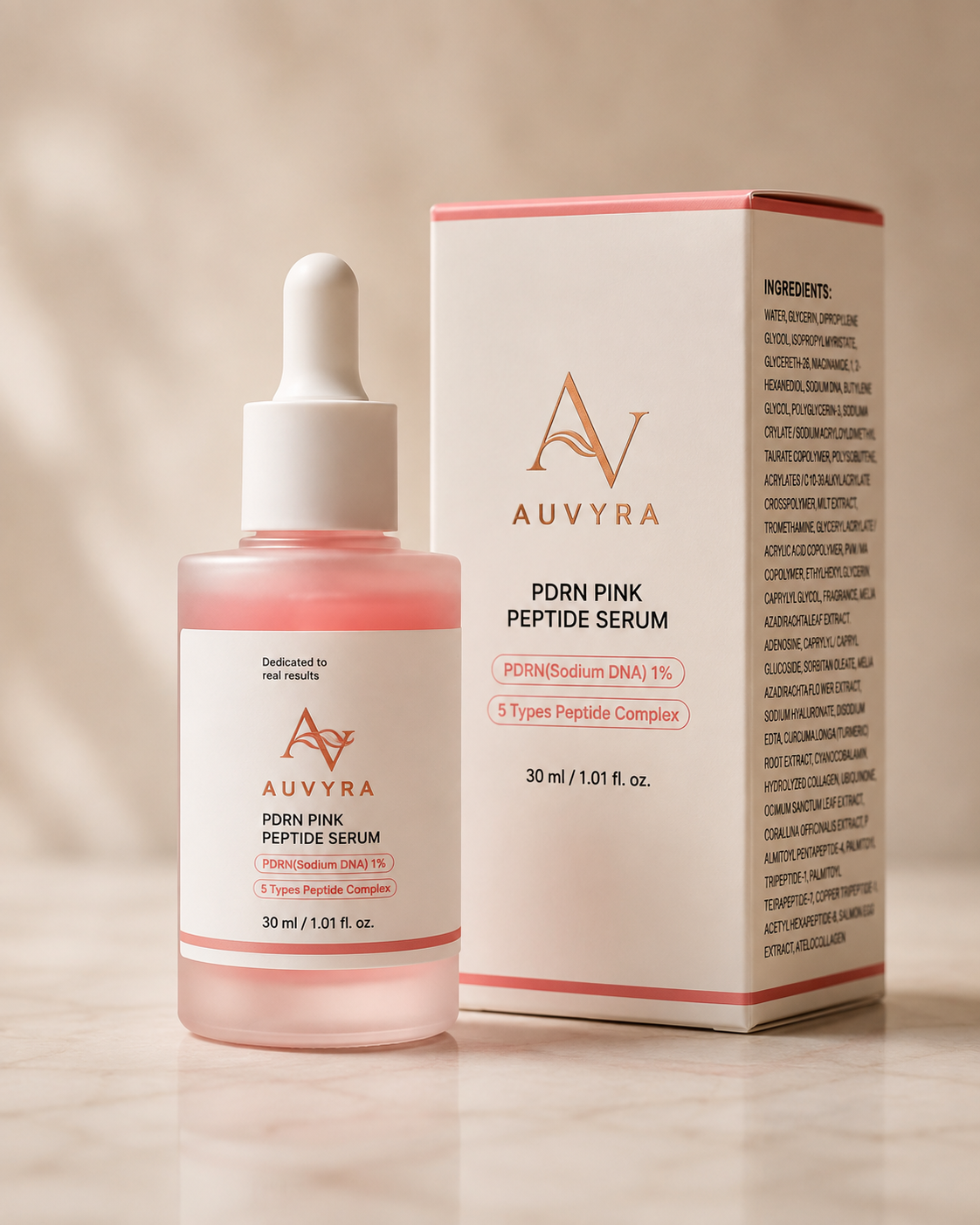
Pairing with the Pink Peptide Serum
The serum and the cream were designed to sit next to each other: the serum as a lightweight daily treatment on damp skin, the cream as the richer step that follows and settles it. Using them together gives you a PDRN routine with both a treatment and a moisture step, which is a more complete shape than either provides alone.
It is a pairing, not a prerequisite. If you already own a moisturiser that suits you, the serum works underneath it. If dryness is your main complaint and you want one product rather than two, the cream on its own is the sensible choice.
Practical takeaways
- 01A serum treats and a moisturiser conditions and settles — light textures first, richer ones after.
- 02Apply to face and neck after your serum steps, morning and/or evening, with sunscreen in the daytime.
- 03Expect softer, smoother, more comfortable-feeling skin — cosmetic effects, sustained by consistent use.
Continue the ritual
Pieces from the AUVYRA range that relate to this reading. Availability shown is live.