
What is PDRN? A Considered Guide
Why one ingredient has become the most discussed name in modern skincare — what it is, what a topical version can honestly be expected to do, and how to read the claims around it.
If you have spent any time reading about skincare in the past two years, you will have met PDRN. It arrives with a scientific-sounding name, a Korean provenance and a great deal of enthusiasm — which is exactly the combination that makes an ingredient worth slowing down for.
This guide is written to be useful whether or not you ever buy anything from us. It explains what PDRN is, where the confusion comes from, and how to place a PDRN product sensibly in a routine you already have.
What the letters actually mean
PDRN is short for polydeoxyribonucleotide. In plain English: chains of the same nucleotide building blocks that make up DNA, broken down into fragments of a particular length. The material used in cosmetic formulation is typically derived from salmon or trout milt, then purified and cut into those short chains.
That purification step is the part worth caring about. How thoroughly a raw material has been processed matters far more than the percentage printed on a carton — and it is the part almost nobody markets, because it is not a number that looks impressive.
The distinction that matters most
Much of the research quoted around PDRN comes from clinical and aesthetic settings — injectable procedures administered by trained practitioners. A topical serum or sheet mask is a different product, delivered a different way, regulated a different way, and intended for a different purpose.
The two are not interchangeable, and a cosmetic brand that blurs them is asking you to draw a conclusion the product cannot support. AUVYRA formulates and describes cosmetics: products that condition, hydrate and improve the look and feel of skin. We will not borrow the language of a medical procedure to sell one.
Why skincare consumers are interested
Set the clinical conversation aside and there is still a reasonable cosmetic story. PDRN is a large, water-loving molecule, which makes it a natural fit for hydrating systems — gels, essences and lightweight serums. Formulated well, that translates into experiences people genuinely notice.
- Skin that feels conditioned and comfortable rather than tight after cleansing.
- A smoother, plumper-looking surface, which is largely a hydration effect and behaves like one — present while the routine continues, not permanent.
- Support for the appearance of a healthy, settled skin barrier, particularly in skin that finds strong actives demanding.
Those are appearance and feel claims, and they are formulation-specific. A well-composed PDRN serum and a poorly composed one share a name and very little else.
Presence is not performance
An ingredient appearing on a label guarantees nothing on its own. Four things decide whether it does anything you can perceive:
- Concentration — enough to contribute, rather than enough to name.
- The formulation around it — the humectants, soothing agents and texture that carry it.
- Stability — whether the formula holds up through its shelf life and your bathroom.
- Regular use — most cosmetic effects are cumulative, and the honest window for judging one is three to four weeks.
What this means for your ritual
Treat a PDRN product as a hydrating treatment step, not as a replacement for the routine around it. Apply it after cleansing and before moisturiser, onto skin still slightly damp. Morning and evening both work; if your skin is currently reactive, start every second day and build from there.
In the morning, finish with a broad-spectrum sunscreen. That remains the single most useful step in any routine, regardless of what sits underneath it.
Pairing
Hydrating ingredients and peptides generally coexist comfortably in a well-designed routine, which is why you often meet them in the same bottle. That said, we would rather not make a blanket compatibility promise on behalf of every formulation on the market — your product's own directions know more about it than any general rule does.
Where the material comes from
The PDRN used in cosmetics is a marine-derived material, most commonly obtained from salmon or trout milt and then purified. Its cosmetic career is largely a Korean one: it is in Korean formulation that PDRN moved from a specialist ingredient into an everyday one, and that provenance is why so much of the vocabulary around it — essences, gel masks, lightweight layering — is Korean in structure too.
As a molecule it is large and water-loving, which decides where it is useful. It suits gels, essences and light serums, and it is a poor fit for anything heavy or occlusive. Formulators reach for it when they want a hydrating system that feels weightless.
Three formats, three different jobs
AUVYRA offers PDRN in three formats. They are not three versions of the same product, and there is no expectation that anyone owns all three. Each occupies a different position in a routine, and any one of them can be used entirely on its own.
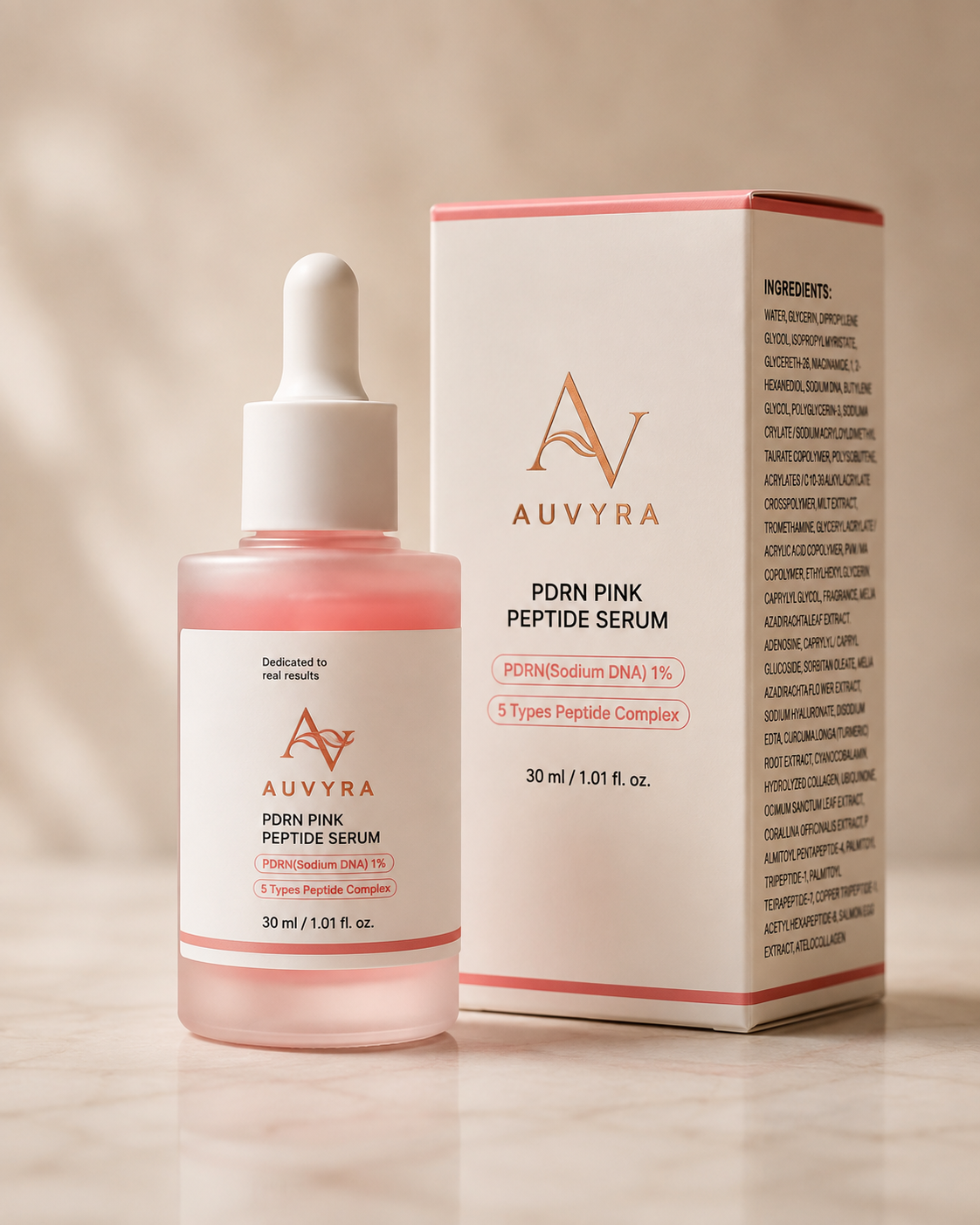
- PDRN Pink Peptide Serum — the lightweight daily treatment and hydration step, applied to clean skin before moisturiser.
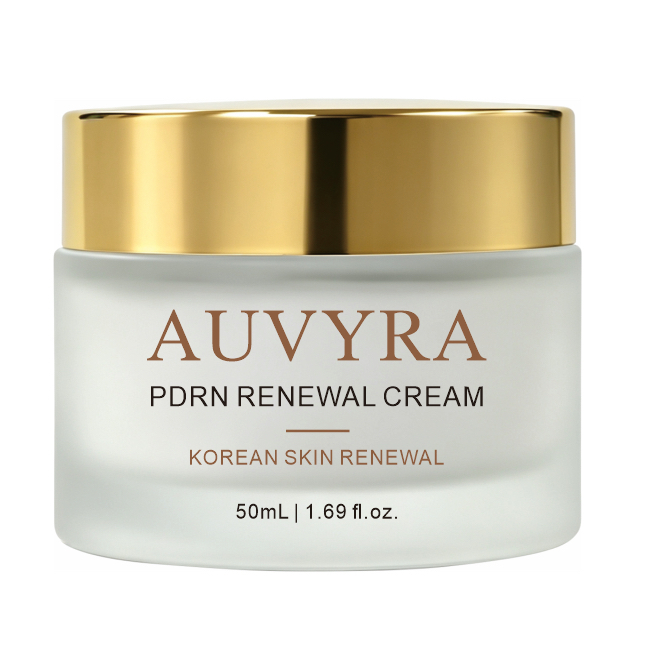
- PDRN Renewal Cream — the richer daily moisturising and conditioning step, applied after the serum or on its own.
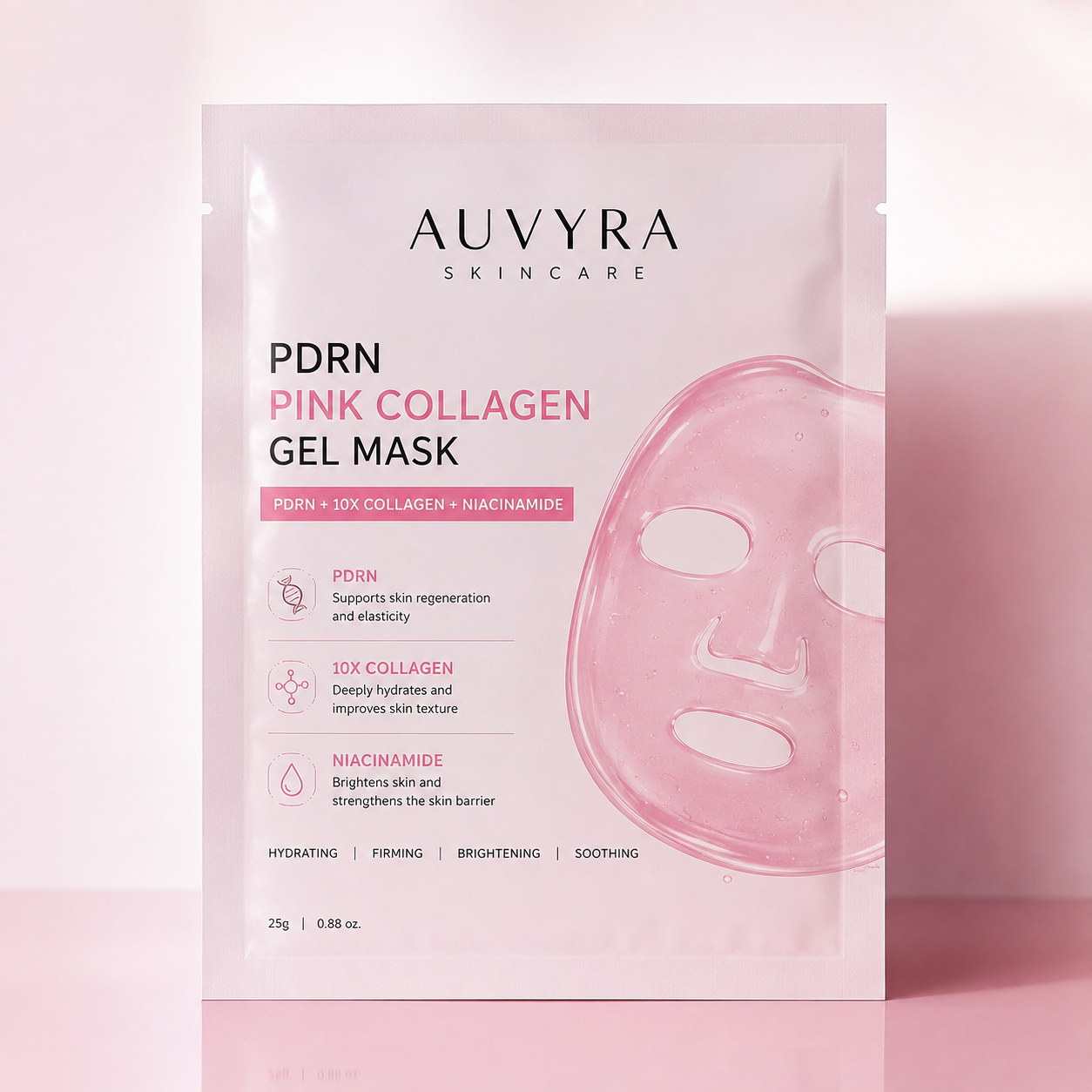
- PDRN Pink Collagen Gel Mask — the occasional intensive hydration ritual, used in place of the usual treatment step rather than in addition to it.
Used together they form a coherent sequence — light before rich, daily before occasional — but that is a convenience rather than a requirement. If you already own a moisturiser you like, the serum alone is a complete way to use PDRN. If your skin's complaint is dryness rather than anything else, the cream alone is the more sensible purchase.
The mask sits outside the daily rhythm entirely. It is a single-use cooling gel worn for twenty to thirty minutes, then removed with the remaining essence patted in — a pause rather than a layer, best given an evening with nothing intensive stacked behind it.
Practical takeaways
- 01PDRN is a hydrating, conditioning cosmetic ingredient — read topical claims and clinical research as separate conversations.
- 02Judge a product by its formulation and how your skin feels after a month, not by the ingredient's reputation.
- 03Serum, cream and mask are three roles, not a set you are expected to complete.
Continue the ritual
Pieces from the AUVYRA range that relate to this reading. Availability shown is live.